HORNBY
THE ORIGIN OF HORNBY
Hornby originally founded Meccano Ltd in 1901 by Frank Hornby in Liverpool, England. Hornby started out making toys for his two sons out of sheet metal. Once he realized that his inventions could become something more, he began the patenting process and got it a year later. Hornby then partnered up with his employer, David Eliot, who lent him money for the patent and offered him office space where they started the Hornby business together. In 1902, he released a construction kit called “Mechanics Made Easy,” consisting of 16 pieces that could be used to make 12 different models, like bridges and cranes made completely from metal. The product unfortunately flopped, selling only 1,500 units in over a year, resulting in 0 profit. The following year, Hornby started expanding the kits to include 36 pieces and repackaged the product in branded tins; the change slowly made Hornby some profit by 1906. Hornby then opened a workshop on Duke Street in Liverpool and officially registered the Meccano trademark.
HORNBY THROUGH THE YEARS
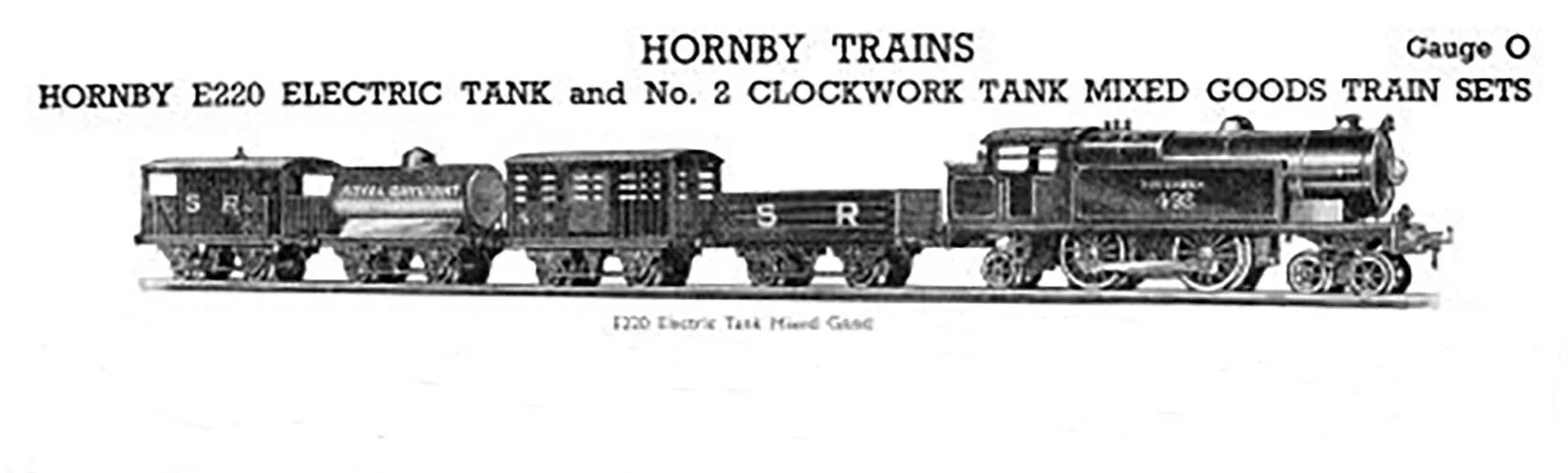
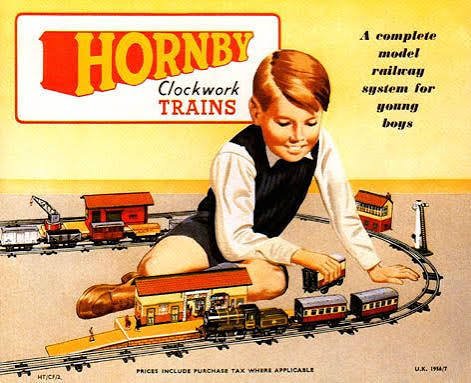
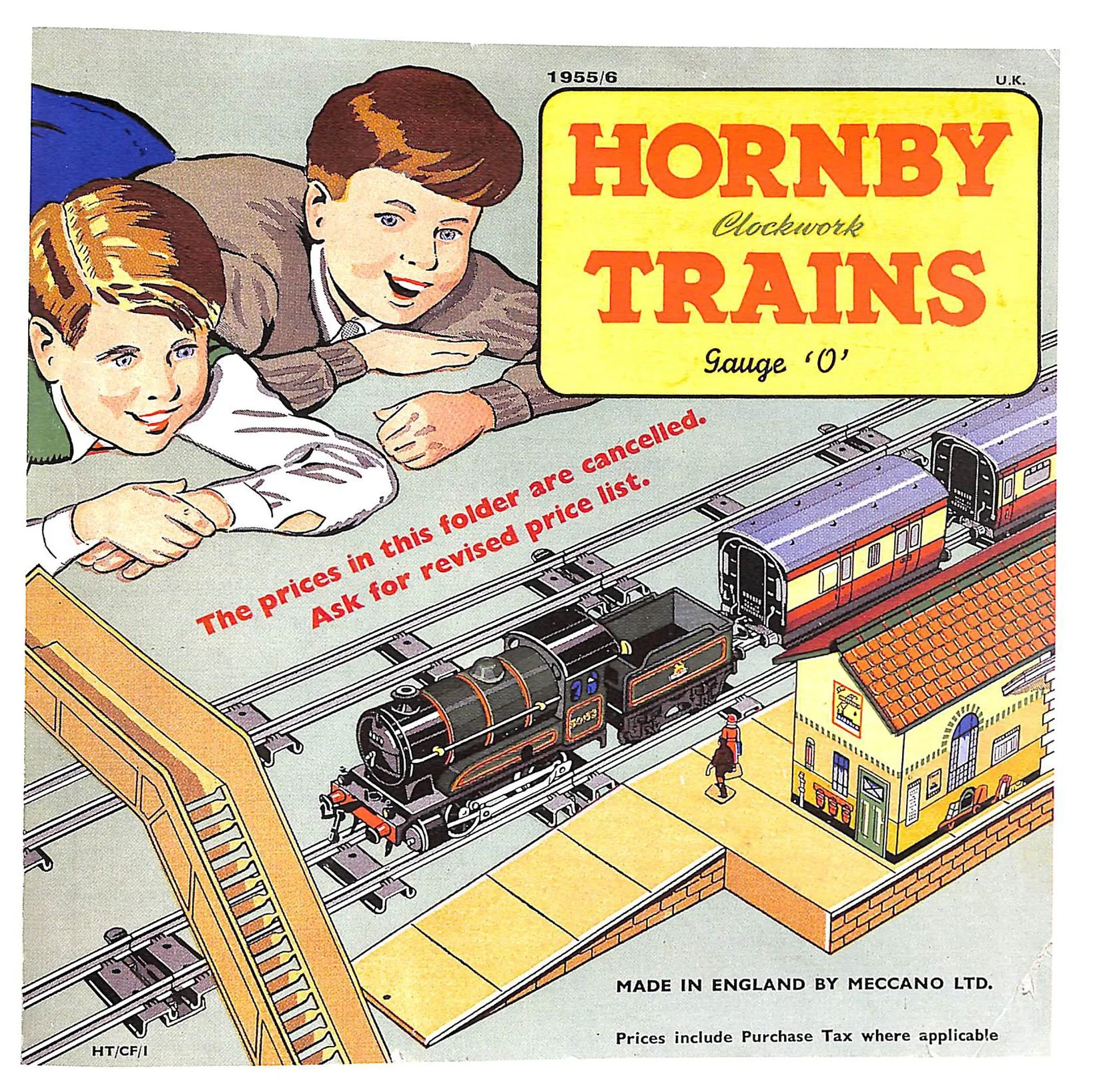
The pivotal moment for the Hornby brand was in 1920 when the first clockwork 0 Gauge tinplate trains. Sold in separate pieces, allowing children to assemble the trains themselves, the trains were incredibly popular and laid the groundwork for the newer models. Hornby later began producing mains-powered trains that used household lightbulbs plugged into the controller to absorb excess electricity, causing the bulbs to glow brighter as the train sped up. Because the rails carried household current, touching them while powered could result in a shock, but even with this issue, the trains quickly became one of the company's most successful product lines.
By the early 1930s, Hornby was a multi-million dollar company and expanded its product line to include lead alloy figures to enhance its railway layouts, including passengers, station staff, and farm animals. A few miniature road vehicles were added in 1933, sold under the name Hornby Modelled Miniatures. Hornby expanded to the United States in 1927, opening a factory in New Jersey to manufacture American-style clockwork trains for the U.S. market. Unfortunately, this was not good for the brand; other popular toy brands in the U.S., combined with the stock market crash, led to Hornby trains vanishing completely from the U.S. toy market by 1930. Inventory was then transferred over to the U.K. and Canada, where they introduced the minifigures and the OO Gauge trains with a smaller scale that soon became the standard for their trains. When WWII began, Hornby was forced to end production and had to produce items for the war. Following the war, Hornby resumed production and was purchased by the Lines Brothers, owners of the Tri-ang train brand, becoming Tri-ang Hornby. By the 1970s, the Lines Brothers company was bankrupt, and Hornby was their own brand again. During the 2000s, Hornby went on to purchase several brands, including Lima, Jouef, Rivarossi, Arnold, and Electrotren, model car maker Pocher, Airfix, and the toy vehicle brand Corgi Classics. Today, Hornby continues to produce model railways and collectible figures, keeping their legacy that began more than a century ago.