MOUSE TRAP
THE ORIGINS OF MOUSE TRAP
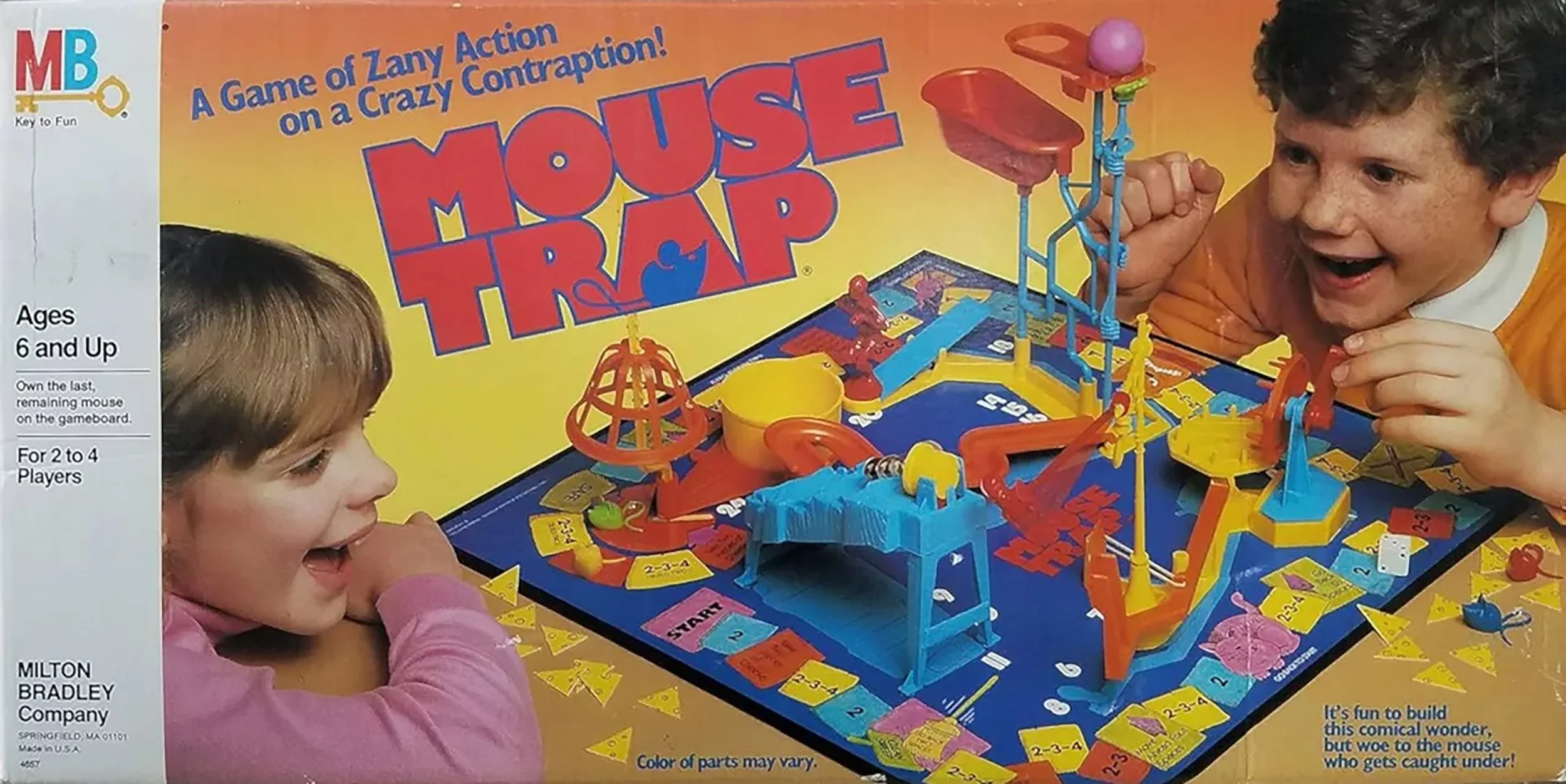
Mouse Trap was created by Gordon Barlow and Burt Meye for the Chicago-based toy design firm Marvin Glass and Associates and released in 1963. Mouse Trap was directly inspired by cartoonist Rube Goldberg, who drew popular cartoons that often featured elaborate machines that accomplished simple tasks through a series of unnecessarily complex and indirect steps. This game has players move around the board collecting cheese wedges while working to build the complicated mousetrap machine and trap their opponents' mice. However, their original game concept lacked a clear turn-based structure. Hank Kramer was brought in to expand the basic idea by developing the gameplay mechanics, determining exactly how players would interact with the pieces, leaving no game decisions to be made.
THE EVOLUTION OF MOUSE TRAP
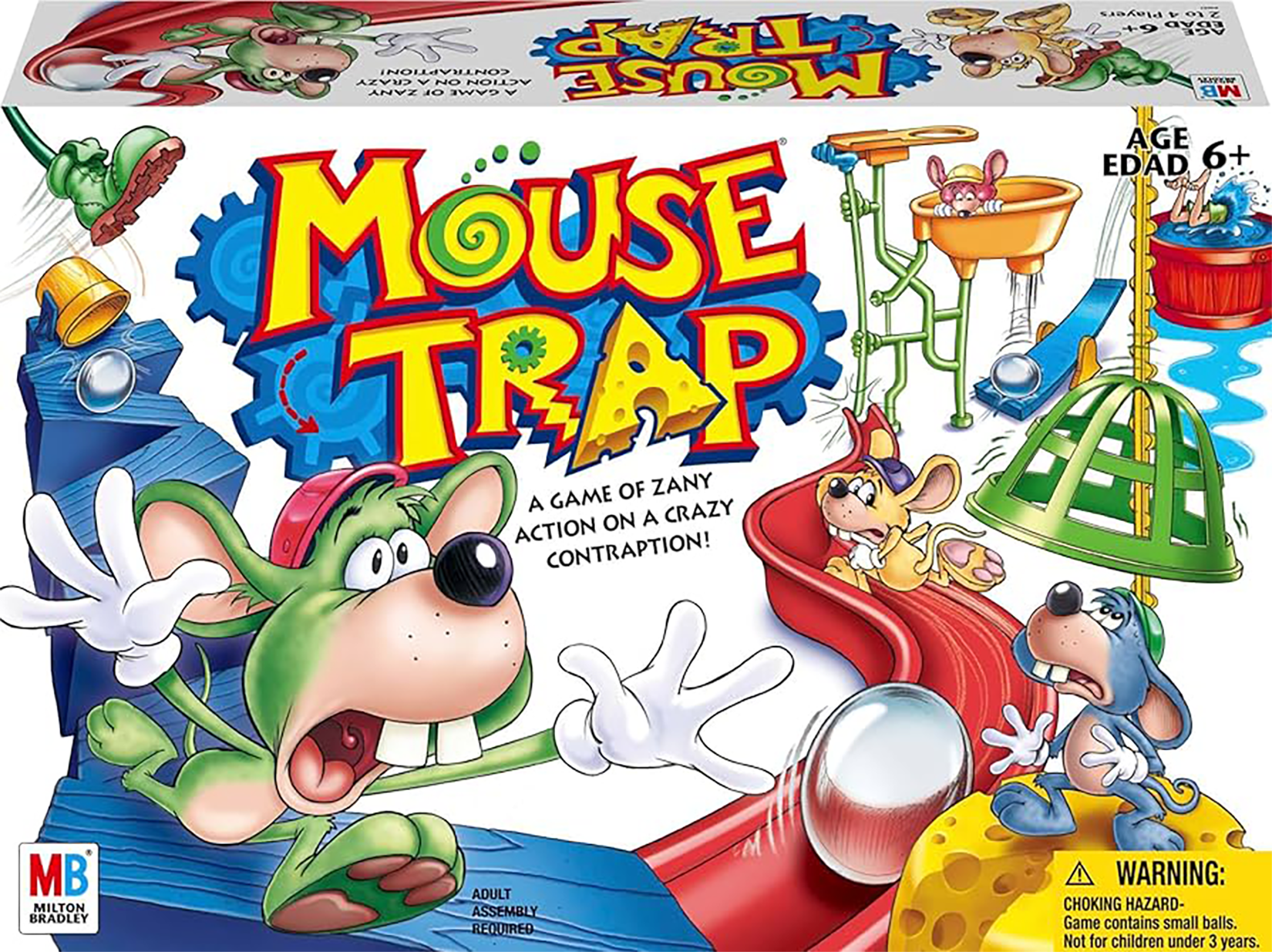
The game was easy for young children to understand, which helped make it an instant success, selling more than 1.2 million copies in its first year alone. Mouse Trap's popularity was further boosted by its unique three-dimensional design, a feature rarely seen in board games at the time. This innovative concept helped distinguish Mouse Trap from its competitors like Monopoly and candy land, making it a favorite among children. Mouse Trap was later acquired by Milton Bradley in 1984, who took over mass production until 1997, when Hasbro absorbed the Milton Bradley company. Over 6 decades after its release, Mouse Trap remains one of the most recognizable board games ever produced. Its memorable chain-reaction machine and gameplay have made it a classic in American toy and board game history.