VELVEETA
The Origins of Velveeta
Velveeta was created by Emil Frey in 1918 for the Monroe Cheese Company in Monroe, New York. The Monroe Cheese Company already had 2 production factories run by Jacob Weisl, who bought the company in 1891 when the company went into foreclosure. The second factory produced mostly Swiss cheese and often had a lot of extra broken pieces of cheese. Weisl wanted to find a way to use the scraps and sent them to the Monroe factory. Emil Frey then began experimenting on his home stove with ways to use the cheese for 2 years before discovering that melting down the cheese scraps and blending them with whey, and adding sodium citrate created a velvety smooth cheese that did not curdle or separate. Frey named his "Velveeta" to emphasize its velvety consistency.
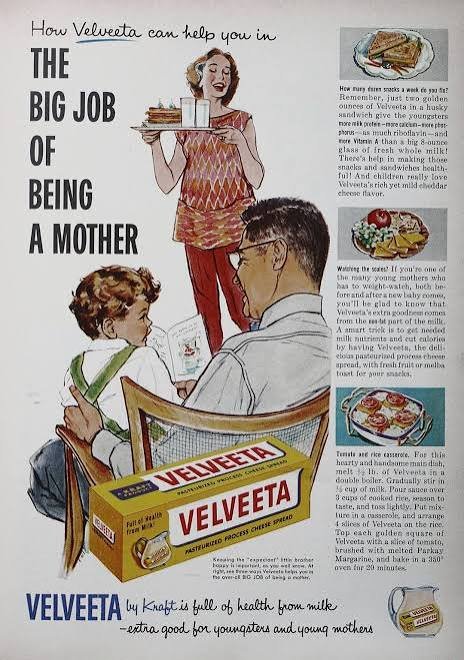
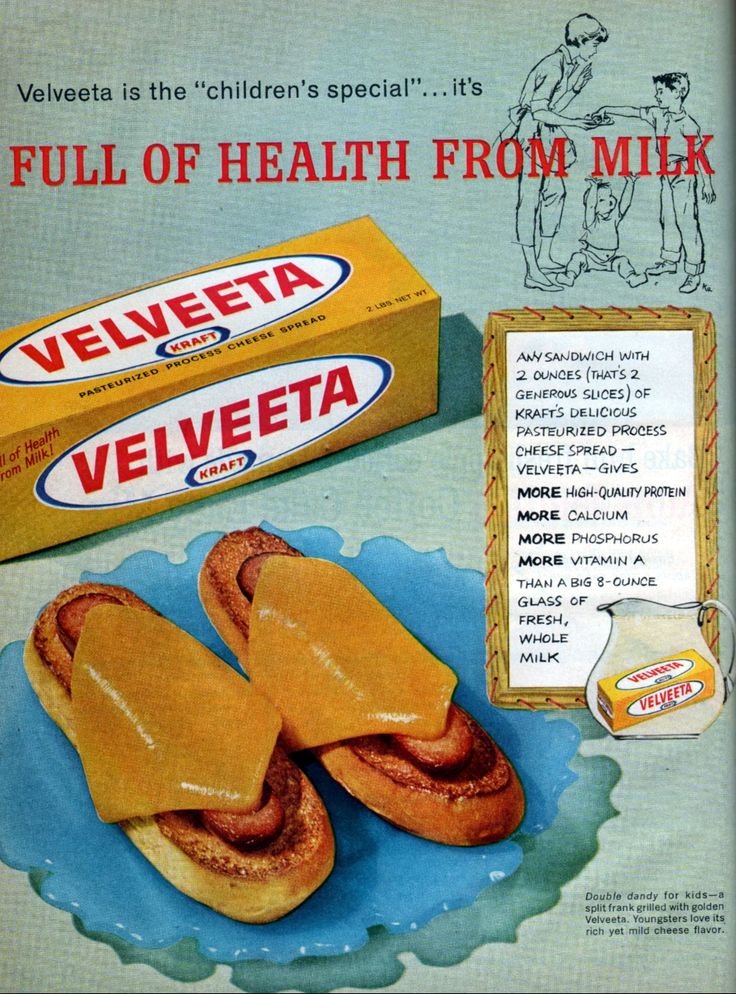
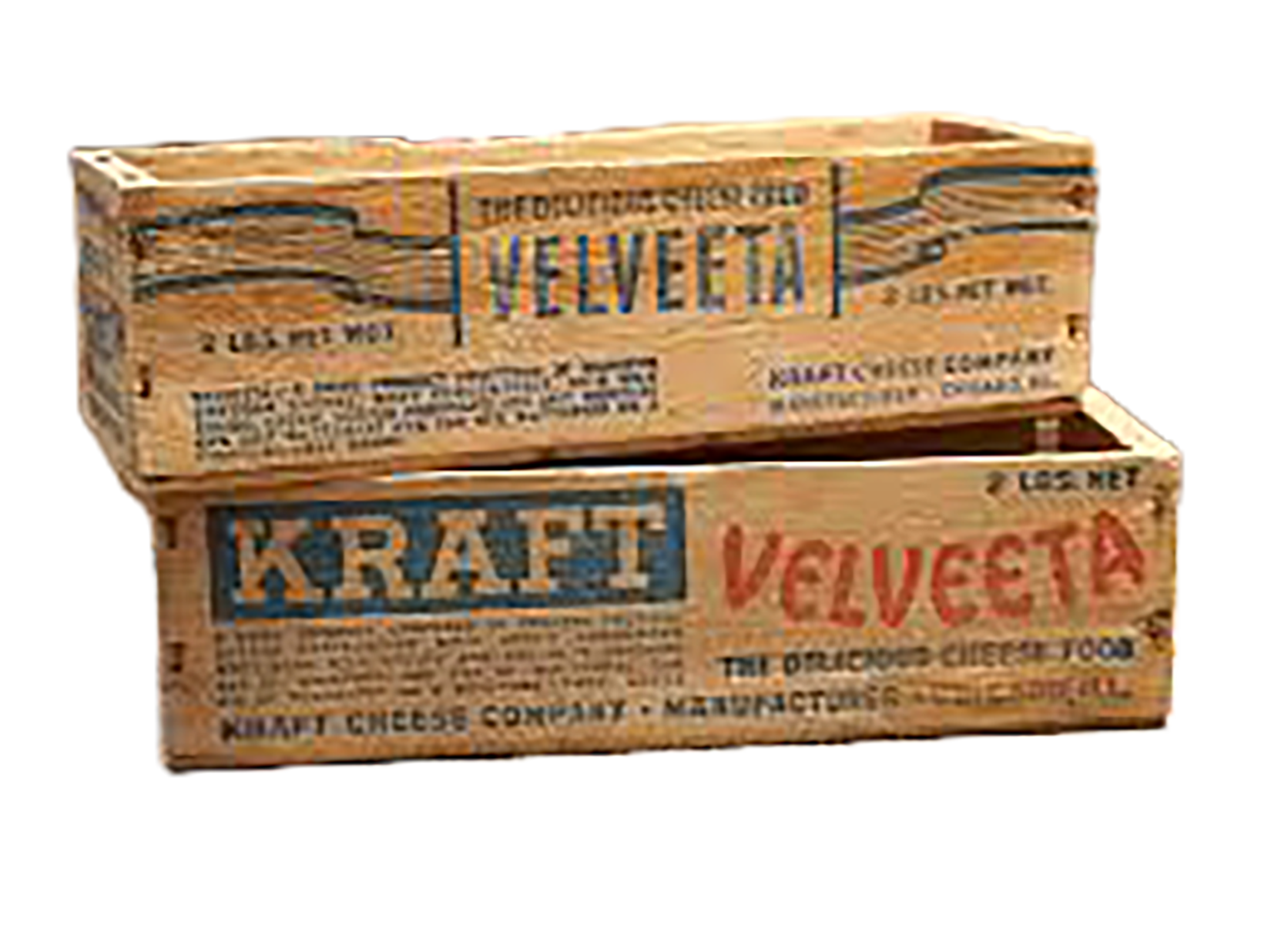
The Monroe Cheese Company began selling Velveeta immediately after its introduction, packaging the cheese in solid brick form wrapped in foil and packed in small wooden boxes. The product's smooth texture and extended shelf life quickly made it popular with consumers. As demand grew, Emil Frey and Jacob Weisl started the Velveeta Cheese Company in February 1923, separate from the Monroe Cheese Co., to market the brand on a larger scale. Velveeta's success soon attracted the attention of the Kraft Cheese Co., which acquired the business later that year and expanded its distribution to grocery stores nationwide. In 1931, Velveeta became the first cheese product to earn the American Medical Association’s seal of approval, which Kraft heavily advertised, increasing sales exponentially. Throughout the 30s and 40s, Velveeta was advertised as a cost-conscious staple product that helped families get through food rationing. It was later declared a "worldwide favorite" by the New York Times in 1976, and hit its sales peak in 1996, with an estimated 8.75 pounds sold per American. Although its recipe and packaging have changed over the years, Velveeta remains a staple in American kitchens and is seen as a quality staple product.
Velveeta Becomes an American Staple