WINDEX
WINDOW CLEANING, REINVENTED
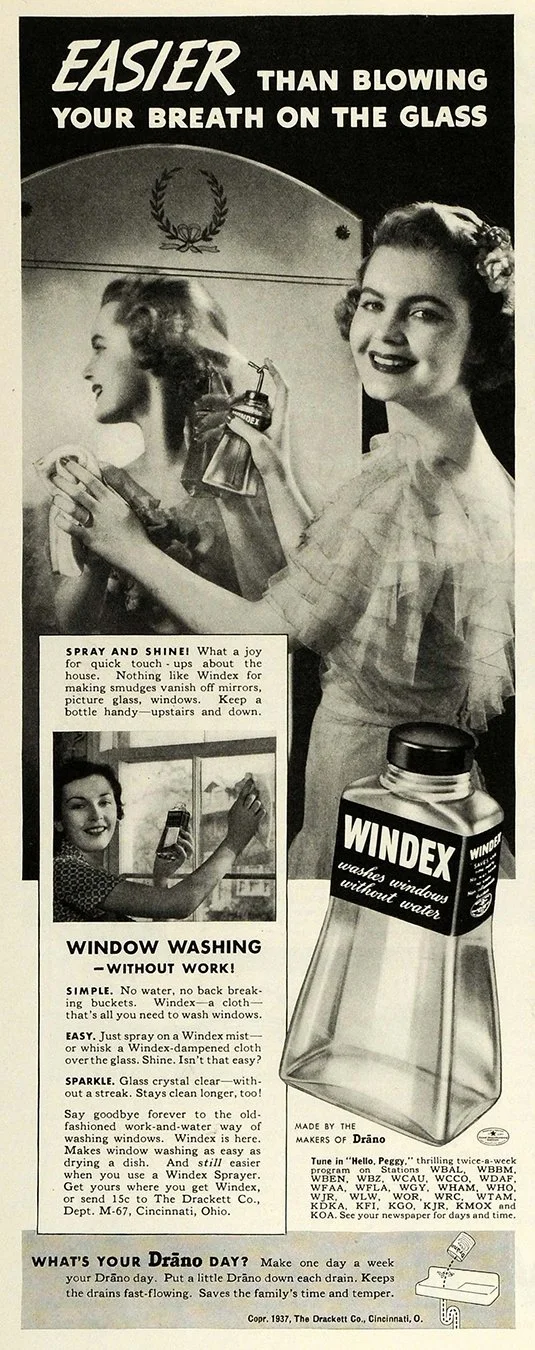
Windex (short for “Window Express”) was developed by Harry R. Drackett at the Drackett Company in 1933. It was released to the public in 1936 during the Great Depression, when many families could no longer afford hired housekeepers. Drackett was inspired to create an easier, less messy way to clean windows after struggling to carry heavy buckets of water himself, Windex allowed an easier mess free solution.
THE MAKING OF A CLEANING CLASSIC
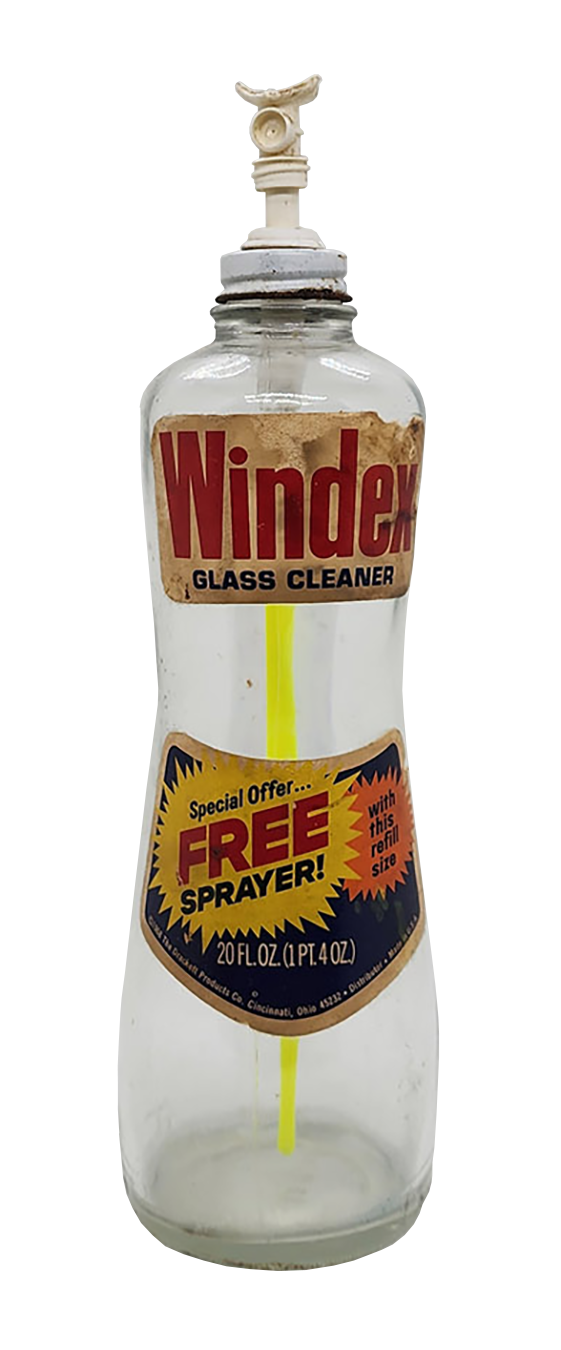
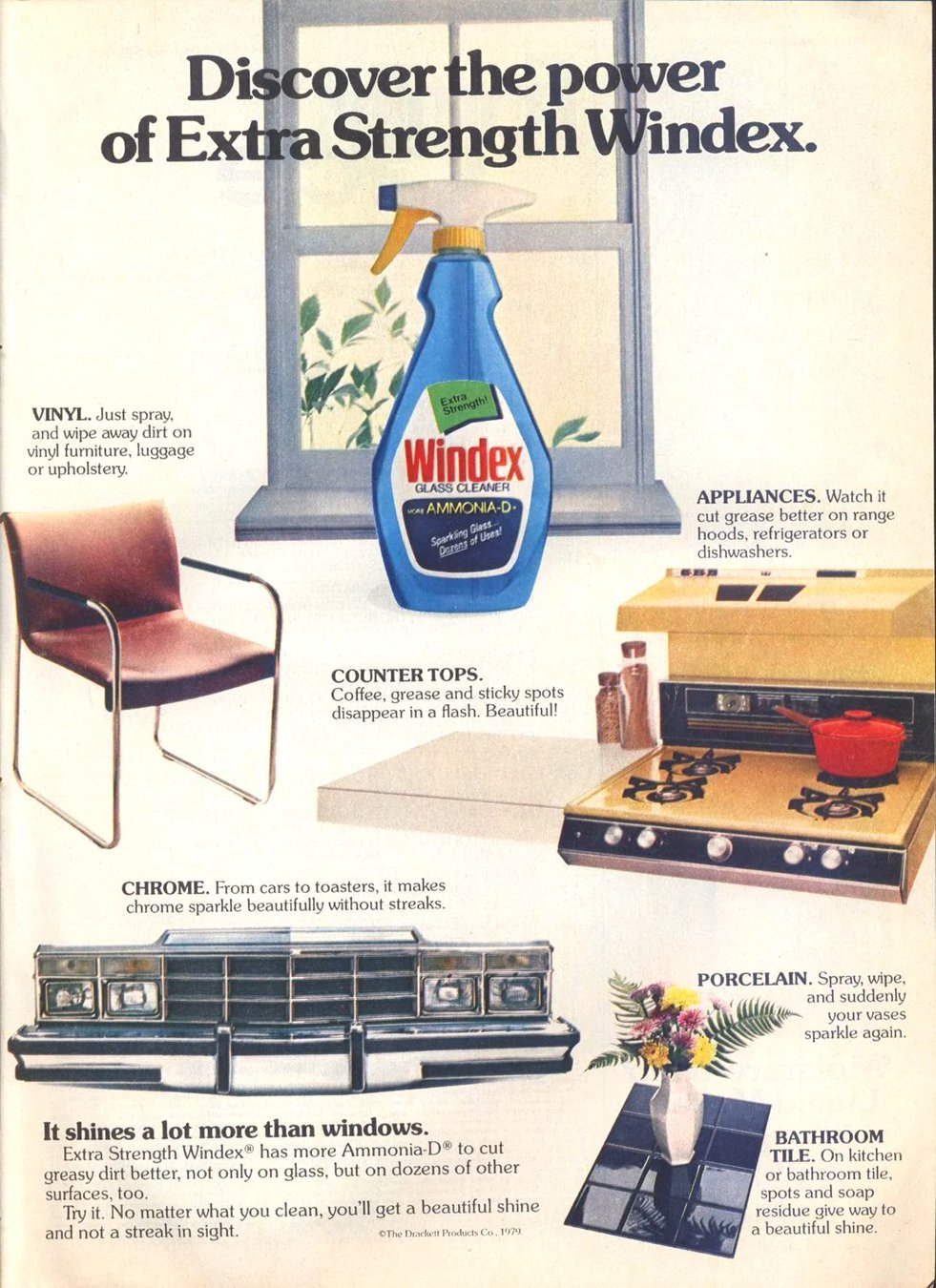
Windex was originally marketed as an automobile windshield cleaner sold in metal cans because of its 100% solvent formula, making it extremely flammable.Early versions were yellow due to their soap base, but the product was later changed in 1936 to its iconic blue color to appeal more to consumers. Following WWII, the invention of surface-active agents allowed Drakett to reformulate Windex to be less flammable making it safe to package in glass bottles. The Drackett company was bought by Bristol-Myers, then by SC Johnson in 1992 who still owns and manufactures it to this day.